Category:
Posted on May 9, 2025
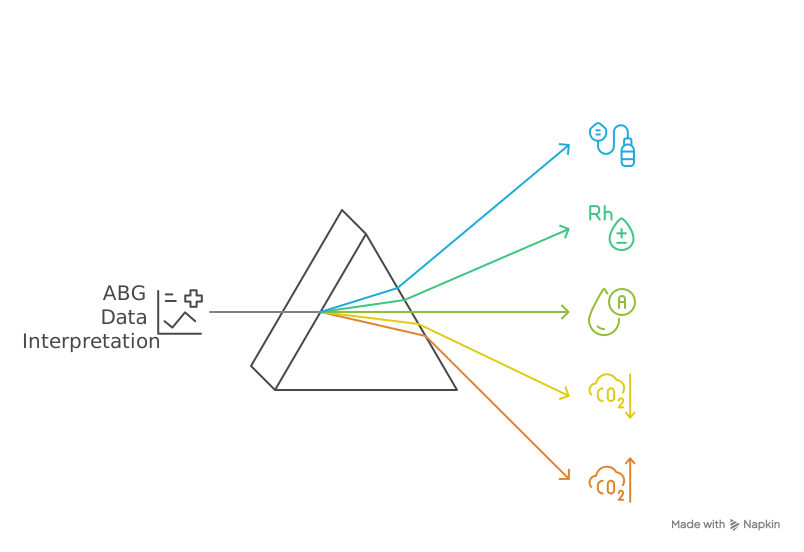
Arterial Blood Gases (ABGs) can feel overwhelming, but with the right structure, they’re completely manageable. If you’re preparing for UK medical school OSCEs and want to understand how to interpret ABGs confidently and clearly, this guide is for you.

An Arterial Blood Gas (ABG) test is a diagnostic tool used to assess:
Oxygenation (pO₂)
Ventilation (pCO₂)
Acid–base status (pH, HCO₃⁻)
Metabolic status (Base excess, Lactate)
ABGs are commonly used in acute care to evaluate patients with:
Respiratory distress
Altered consciousness
Suspected sepsis or diabetic emergencies
Parameter | Normal Range | Clinical Significance |
pH | 7.35 – 7.45 | Indicates acidosis or alkalosis |
pCO₂ | 4.7 – 6.0 kPa | Respiratory function (ventilation) |
pO₂ | 10 – 13.3 kPa | Oxygenation |
HCO₃⁻ | 22 – 26 mmol/L | Metabolic compensation |
Base Excess | –2 to +2 | Metabolic buffering capacity |
Lactate | <2 mmol/L | Tissue perfusion; raised in shock/sepsis |
Low pH (<7.35) → Acidosis
High pH (>7.45) → Alkalosis
pCO₂ high? Think respiratory acidosis
HCO₃⁻ low? Think metabolic acidosis
Is the opposing system reacting?
If so, is the compensation full or partial?
Is the patient hypoxic?
Are they on supplemental oxygen?
Tie your interpretation to the context given (e.g., post-op patient, sepsis, DKA)
Pattern | ABG Findings | Example Causes |
Respiratory Acidosis | ↓pH, ↑pCO₂, normal/↑HCO₃⁻ | COPD, opioid overdose |
Respiratory Alkalosis | ↑pH, ↓pCO₂ | Hyperventilation, anxiety, PE |
Metabolic Acidosis | ↓pH, ↓HCO₃⁻, ↓pCO₂ (compensated) | DKA, sepsis, renal failure |
Metabolic Alkalosis | ↑pH, ↑HCO₃⁻, ↑pCO₂ (compensated) | Vomiting, diuretics |
In UK medical schools, ABG interpretation typically appears as:
“Explain this ABG to a nurse”
“Talk through this ABG result out loud (examiner present)”
You may be given a chart or scenario and expected to:
Analyse and explain the ABG aloud
Suggest a likely diagnosis
Recommend initial management
Tip: Use a consistent structure. Examiners reward clarity and reasoning over perfection.
Scenario: 68-year-old male, post-op, drowsy
ABG:
pH: 7.26
pCO₂: 6.8 kPa
HCO₃⁻: 24 mmol/L
pO₂: 10.2 kPa
FiO₂: 0.21
Interpretation: Respiratory acidosis — likely hypoventilation (e.g., opioid effect)
Scenario: 22-year-old female, anxious, hyperventilating
ABG:
pH: 7.48
pCO₂: 4.0 kPa
HCO₃⁻: 22 mmol/L
Interpretation: Respiratory alkalosis (likely anxiety-driven)
Scenario: 25-year-old diabetic with vomiting
ABG:
pH: 7.19
pCO₂: 3.8 kPa
HCO₃⁻: 12 mmol/L
Lactate: 1.5 mmol/L
Interpretation: Metabolic acidosis with respiratory compensation
Start with the pH, then identify whether the issue is respiratory or metabolic
Look for compensation to determine if it’s acute or chronic
Always relate your interpretation to the clinical story
Practice speaking your interpretation out loud — just like the real OSCE
NICE Clinical Knowledge Summaries – ABG and COPD context: https://cks.nice.org.uk/topics/chronic-obstructive-pulmonary-disease/goals-outcome-measures/nice-quality-standards/
Oxford Handbook of Clinical Medicine – Chapter on ABG interpretation
Patient.info – Patient-level explanation of ABG: https://patient.info/tests-investigations/arterial-blood-gases-abgs
NIH – StatPearls: https://www.ncbi.nlm.nih.gov/books/NBK536919/
NHS England Guidelines – IPC Manual: https://www.england.nhs.uk/national-infection-prevention-and-control-manual-nipcm-for-england/chapter-1-standard-infection-control-precautions-sicps/
📤 Ready to practice? Head to MLAbuddy.co.uk and try our AI-powered data interpretation stations — built to simulate real OSCE conditions.
Categories: ABG interpretation, arterial blood gas, OSCE prep, UK medical students, ABG cases, how to interpret ABG, medical exam tips
Free to start. No card needed, no credits to top up.
