Category:
Posted on May 9, 2025
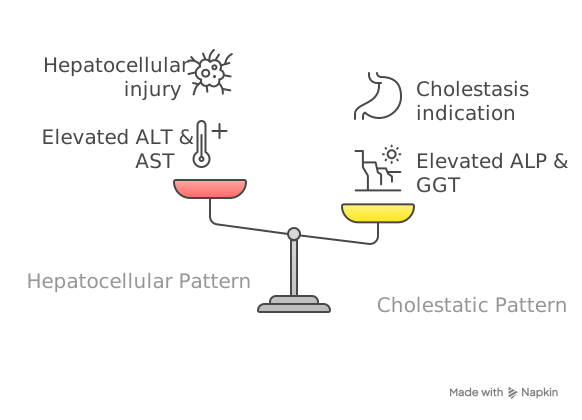
Liver function tests (LFTs) are a panel of blood tests used to assess liver health and function. In OSCEs, students are often expected to interpret LFT results in the context of a clinical scenario and explain their significance clearly.
Parameter | Normal Range | Indicates |
ALT | 7–56 U/L | Hepatocellular injury (e.g. hepatitis) |
AST | 10–40 U/L | Hepatocellular injury |
ALP | 44–147 U/L | Cholestasis or bone disease |
GGT | 9–48 U/L | Alcohol or biliary disease |
Bilirubin | <21 µmol/L | Hemolysis, liver dysfunction, obstruction |
Albumin | 35–50 g/L | Synthetic function of the liver |
INR | 0.8–1.2 (if included) | Coagulation, liver synthetic function |
Elevated? Suggests hepatocellular injury
ALT > AST → viral hepatitis likely
AST > ALT → alcohol-related liver injury
Elevated ALP with GGT → cholestasis
Elevated ALP with normal GGT → consider bone disease
Raised? Suggests jaundice, either pre-hepatic, hepatic, or post-hepatic
Low albumin / raised INR? → reduced synthetic function (chronic liver disease)
Symptoms? History of alcohol use? Medications? Risk factors for hepatitis?
In UK medical school OSCEs, LFT interpretation might be presented as:
A data set handed to you with a clinical note (e.g., fatigue, jaundice, RUQ pain)
A simulated patient asking for results explanation
A nurse/colleague asking for your opinion on abnormal bloods
You’re expected to:
Interpret the values logically
Identify the likely pattern (hepatitic, cholestatic, mixed)
Suggest a possible cause and recommend the next steps
Pattern | Main Features | Likely Causes |
Hepatocellular | ↑ ALT, ↑ AST | Viral hepatitis, alcohol, paracetamol |
Cholestatic | ↑ ALP, ↑ GGT | Gallstones, PBC, PSC, bile duct cancer |
Mixed | ↑ ALT + ↑ ALP | Drug-induced liver injury, sepsis |
Isolated Bilirubin | Only ↑ Bilirubin | Gilbert’s syndrome, hemolysis |
Low Albumin/High INR | ↓ Albumin, ↑ INR | Cirrhosis, advanced liver failure |
Scenario: 52-year-old woman presents with new-onset jaundice. No abdominal pain. Occasional alcohol use.
LFTs:
ALT: 145 U/L
AST: 110 U/L
ALP: 85 U/L
GGT: 62 U/L
Bilirubin: 55 µmol/L
Albumin: 32 g/L
INR: 1.3
Interpretation: Hepatocellular injury pattern → likely acute hepatitis (needs further viral, autoimmune, or drug-related workup)
Know the normal ranges and what each LFT component tells you
Differentiate hepatitic vs cholestatic patterns
Always tie your interpretation to the clinical story
Speak clearly and structure your interpretation logically in OSCEs
NICE CKS – Abnormal LFTs
British Liver Trust – Understanding Liver Tests
NHS Inform – Liver Function Tests
Oxford Handbook of Clinical Medicine – LFT section
📤 Want to practise? Head to MLAbuddy.co.uk and access AI-powered data interpretation stations built with real OSCE formats in mind.
Keywords: LFT interpretation, liver function tests, OSCE prep, UK medical students, interpreting LFTs, exam tips, liver enzymes
Free to start. No card needed, no credits to top up.
